Dupont vs Sacha: A Mouthwatering Battle Of Rugby Generations
- 34
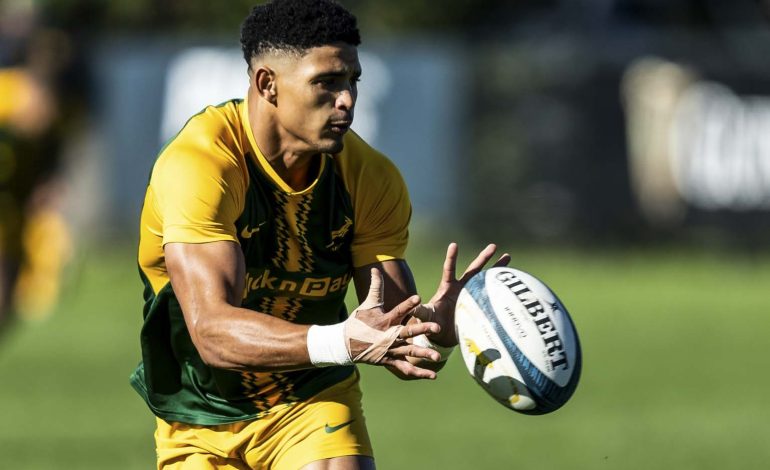
The Nations Championship could provide the stage for a mouthwatering individual contest between France captain Antoine Dupont and South Africa’s rising superstar Sacha Feinberg-Mngomezulu, with the two playmakers going head-to-head in one of international rugby’s most enthralling fixtures.
Few matchups in world rugby capture the imagination quite like France against South Africa at the Stade de France on Friday night. When Les Bleus and the Springboks meet, supporters expect physicality, intensity and a contest decided by the smallest of margins.
With Dupont and Feinberg-Mngomezulu set to line up opposite one another at flyhalf, the fixture offers something even more intriguing: a fascinating battle between two generations of rugby brilliance.
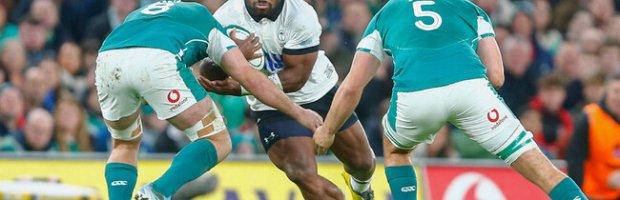
Dupont, widely regarded as one of the finest players of his generation, if not the finest, embodies everything that makes French rugby so dangerous. His ability to dictate the tempo, manipulate defensive structures and create opportunities from seemingly impossible situations has made him one of the most influential players in the international game.

Across the halfway line stands Feinberg-Mngomezulu, one of South Africa’s most exciting young attacking talents. Blessed with exceptional footwork, vision, a dangerous running game and an impressive kicking repertoire, the 24-year-old has the potential to become a defining figure in Springbok rugby for years to come. Although their playing styles may differ, their influence on their respective teams is remarkably similar.
The French maestro has built his reputation on extraordinary rugby intelligence. Whether operating in his preferred position of scrumhalf or, on this occasion, at flyhalf, he has an exceptional ability to identify defensive weaknesses before his opponents have even recognised them.
His acceleration, strength through contact and understanding of space make him particularly difficult to defend against. He can bring his forwards into the game, release dangerous outside backs or take matters into his own hands when opportunities present themselves.
Feinberg-Mngomezulu, meanwhile, offers a different kind of threat.
The young Springbok has an instinctive attacking mindset. He is comfortable taking on defenders, playing with width and attempting passes that other flyhalves might not even consider. His confidence and willingness to play what is in front of him make him an unpredictable attacking weapon.
Against France, those qualities could prove invaluable.
The Springboks would need someone capable of unlocking a disciplined French defence, and Feinberg-Mngomezulu’s ability to create something out of nothing could prove crucial.
One of the most intriguing aspects of this potential matchup would be how the two players approach the tactical battle.
Dupont would likely look to exploit the spaces around the Springbok defensive line, using his experience to control territory and force South Africa into uncomfortable defensive decisions.
Feinberg-Mngomezulu, on the other hand, could look to challenge France directly, using his running threat and attacking instincts to put the French backline under pressure.
South Africa’s physical approach would test Dupont’s ability to operate under pressure, particularly around the breakdown. Meanwhile, Feinberg-Mngomezulu would have to contend with France’s aggressive defensive systems and the tactical intelligence of a player who rarely makes the wrong decision.
The contest would not simply be about who produces the most spectacular moments. It would be about who manages the game better when the pressure reaches its highest point.
The wider contest would be just as compelling.
France’s attacking flair and ability to move the ball quickly would be tested against South Africa’s formidable forward pack, physical defence and exceptional tactical kicking game.
The Springboks would undoubtedly look to establish dominance up front, giving Feinberg-Mngomezulu the platform to dictate proceedings.
France, meanwhile, would want to create a faster, more unpredictable contest, allowing Dupont to exploit the opportunities that emerge.
For both players, the challenge would be to impose their identities on the match without allowing the opposition to dictate the terms.
And that is precisely what makes this potential showdown so exciting.
Dupont has already established himself among rugby’s elite. He has won the biggest honours in the club game and become the face of French rugby.
Feinberg-Mngomezulu is still building his legacy, but his talent suggests he could become one of the defining flyhalves of the next generation.
This Nations Championship encounter would provide a fascinating opportunity to compare two extraordinary rugby minds.
For Dupont, it would be another opportunity to demonstrate why he remains one of the game’s most influential players.
For Feinberg-Mngomezulu, it would be an opportunity to measure himself against one of the very best and show that he belongs on the biggest stage.
There would be no shortage of quality across the pitch, but the individual battle between the French maestro and the South African prodigy could become the defining storyline of the evening.
One brings experience, leadership and an extraordinary understanding of the game.
The other brings youthful confidence, attacking brilliance and the ambition to help take South African rugby into a new era.
France against the Springboks is always a blockbuster. But Dupont against Feinberg-Mngomezulu? That could be a contest rugby supporters remember for years to come.