La Rochelle: The Foundations of a Return to the Top
- 1235

For several years, Stade Rochelais established themselves as one of the most formidable sides in European rugby. Back-to-back Investec Champions Cup titles in 2022 and 2023 confirmed their status among the continent’s elite, with their physical dominance, defensive resilience and ability to deliver in the biggest matches becoming defining characteristics of the team.
However, maintaining that level of success has proved difficult. La Rochelle have experienced periods of inconsistency, raising questions about whether they can return to the heights they reached during their European triumphs. With experienced players, promising young talent and a long-term commitment to head coach Ronan O’Gara, there are reasons to believe the club can rebuild its position among Europe’s leading sides.
The challenge is not simply to recapture past success, but to establish the foundations for sustained competitiveness in both the Top 14 and European competition.
Recruitment: Building for the Present and the Future
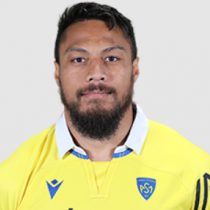
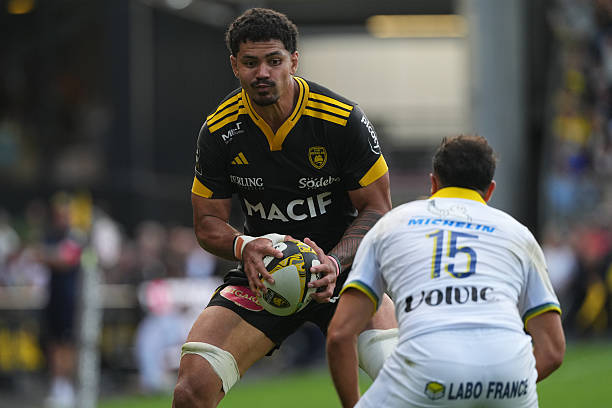
La Rochelle’s recruitment reflects an ambition to strengthen the squad while maintaining a long-term vision. The arrivals of Salmaan Moerat, Samoa captain Théo McFarland, Sam Tuifua, David Kriel and George Moala bring a combination of international experience, physicality and versatility.
McFarland, who joined from Saracens, is an example of the type of player La Rochelle are bringing into the squad. A former professional basketball player who has gone on to captain Samoa, he offers athleticism and mobility alongside the physical qualities required at the highest level of rugby. His profile fits the demands of a La Rochelle side that has traditionally relied on winning collisions and imposing itself on opposition teams.
His performances have also shown his ability to make an impact in possession. According to the Ultimate Rugby statistics supplied for this article, McFarland has recorded 21 carries, including 21 dominant carries, made 229 metres, and produced one line break. He has averaged 2.44 post-contact metres per carry and contributed 12 tackles. These figures underline the physical presence, mobility and defensive involvement he can bring to La Rochelle as they look to strengthen their squad for the challenges ahead.
However, the club’s approach is not limited to recruiting established players. Investment in young talent is equally important to ensuring that the squad remains competitive over the coming seasons.
Sacha Elissalde, a 19-year-old fly-half capable of playing at centre or fullback, represents that investment. With opportunities already coming in the Top 14, his development offers La Rochelle another option while allowing the club to build for the future.
Valentin Bouju provides another example. Born in 2008, he made his Top 14 debut against Toulon, started the match and played the full 80 minutes. Coming directly from the U18 level without first playing in the Espoirs, France’s under-21 development competition, his performance demonstrated the club’s willingness to trust young players in demanding senior environments.
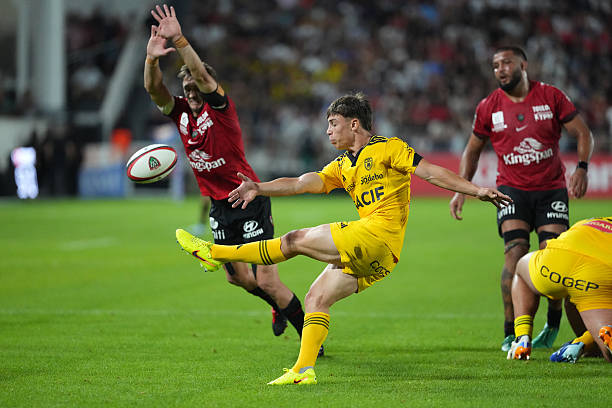
Together, these signings and opportunities for emerging players show how La Rochelle are attempting to balance immediate competitiveness with long-term squad development. Established international talent can help the team compete now, while young prospects offer the potential to become important contributors in the years ahead.
Ronan O’Gara: The Importance of Long-Term Leadership
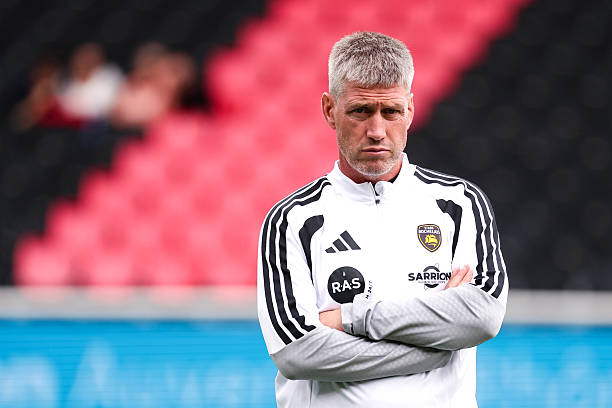
At the centre of La Rochelle’s ambitions is Ronan O’Gara. Since taking charge in 2021, the Irishman has played a central role in transforming the club into a European powerhouse, culminating in Champions Cup victories in 2022 and 2023.
O’Gara’s coaching identity has been closely associated with physical intensity, defensive organisation and the ability to perform under pressure. These characteristics became central to La Rochelle’s success, particularly in high-stakes European fixtures where the team repeatedly demonstrated its capacity to overcome some of the strongest sides in the competition.
Maintaining that identity while adapting to the changing demands of professional rugby is now a significant challenge. Opponents have become familiar with La Rochelle’s strengths, while changes in squad personnel mean the team must continue developing rather than relying entirely on the methods that brought previous success.
O’Gara’s long-term commitment to the club, with his contract extending to 2031, provides continuity during this process. It gives La Rochelle the opportunity to develop their squad and tactical approach under a coach who understands the club’s culture and expectations.
Ultimately, continuity in leadership does not guarantee a return to the top. However, it provides a foundation from which La Rochelle can work towards rebuilding the consistency and intensity that made them so successful.
Rediscovering Their Winning Identity
La Rochelle’s success was built on more than individual talent. Their ability to dominate collisions, control momentum and apply sustained defensive pressure made them an exceptionally difficult team to beat. They could force opponents into uncomfortable situations, limit their attacking opportunities and use their physical advantage to take control of matches.
That identity remains an important part of the club’s ambitions, but rediscovering it requires more than simply repeating the formula that delivered success in the past. The team must find a way to combine its traditional strengths with the consistency and adaptability needed to compete in the modern game.
Opposition teams have had years to study La Rochelle’s strengths. Simply attempting to recreate the formula that brought European success may not be enough.
Their opening six rounds of the 2026–27 Top 14 season, however, suggest that progress is being made when compared with the same stage last season.
Across the first six rounds of the 2025–26 campaign, La Rochelle recorded two victories and suffered four defeats, scoring 134 points and conceding 149 for a points difference of −15. This included their rearranged fixture against Toulon, which was played outside its original round sequence.
The opening six rounds of 2026–27 tell a more encouraging story. La Rochelle have won four and lost two, scoring 144 points while conceding 135. Their points difference has consequently improved to +9. Compared with the same stage last season, they have recorded two additional victories, scored 10 more points and conceded 14 fewer. That represents a 24-point improvement in their points difference.
The quality of some of those victories also stands out. La Rochelle opened their campaign by beating Toulouse 30–27 before securing a narrow 21–20 away victory against Toulon. After defeats to Racing 92 and Pau, they responded with convincing wins over Clermont and Lyon. That ability to recover from setbacks is an important sign of progress, particularly for a side looking to establish greater consistency.
Nevertheless, the improvement should be viewed in context. The 39–17 defeat to Pau demonstrated that defensive vulnerabilities have not disappeared, and two losses in six rounds show that La Rochelle have not yet reached a level of sustained dominance. A stronger opening does not, on its own, prove that they can reproduce their previous European success.
What the statistics do show is that La Rochelle have made a more positive start than they did last season. They are winning more frequently, scoring more points and conceding fewer. If they can build on these improvements while restoring the physical intensity and defensive discipline that once defined them, they will give themselves a stronger platform for the challenges ahead.
The Road Back to European Contention
La Rochelle’s return to the top depends on turning promising signs into consistent performances. Their recruitment has added experience and depth, young players offer long-term potential, and Ronan O’Gara provides continuity in leadership.
However, the Champions Cup remains the ultimate test. Last season, La Rochelle opened with a 39–20 win over Leicester Tigers before losing to the Stormers, Leinster and Harlequins. They scored 101 points and conceded 114 across their four pool matches, finishing with just one victory. Their attacking threat remained evident, but defensive inconsistency proved costly. The narrow 25–24 defeat to Leinster highlighted how fine the margins were, while the other losses exposed their struggle to maintain the standards required at European level.
This contrasts with their championship-winning campaigns, when La Rochelle defeated Leinster 24–21 in the 2022 final and 27–26 in 2023. Those victories demonstrated their ability to combine physical dominance with defensive resilience, discipline and composure under pressure.
Looking Ahead: The 2026–27 Champions Cup
La Rochelle’s four wins from their opening six Top 14 rounds offer encouragement, but the challenge is to carry that form into Europe. Their opening fixture against the Lions at Stade Marcel-Deflandre presents an opportunity to make a strong start, although the teams have no previous head-to-head record to draw upon.
Past encounters with South African opposition provide some context. La Rochelle edged the Stormers 22–21 away in the 2023–24 round of 16, but lost 42–21 to the same side in the following campaign. The contrasting results highlight the challenge posed by South African teams’ physicality and intensity.
La Rochelle are in Pool 2 alongside the Lions, Saracens, Exeter Chiefs, Connacht and Toulouse, but will face only four of those opponents. Their home matches against the Lions and Connacht offer opportunities to build momentum, while away fixtures against Saracens and Exeter will test their consistency. La Rochelle beat Saracens 24–10 in the 2023 quarter-finals, but must now travel to StoneX Stadium, making points on the road potentially crucial to their qualification hopes.
The foundations for a return are in place, but La Rochelle must rediscover the defensive intensity, composure and collective belief that defined their title-winning sides. The Lions provide the first opportunity to show whether they can turn domestic progress into a genuine European resurgence.